
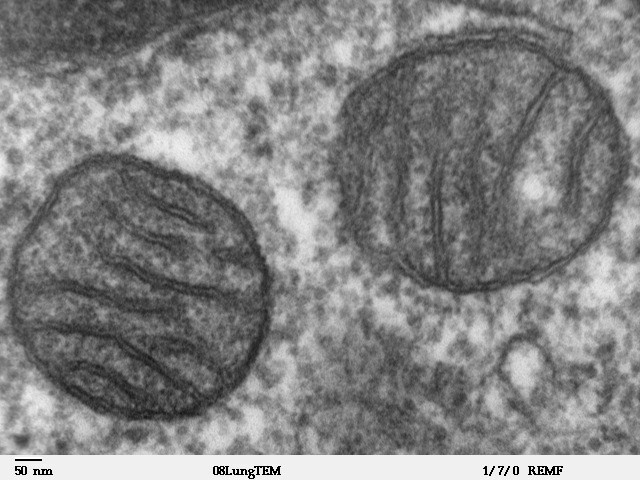
Organelles
I couldn’t sleep. It was well before dawn, sometime around four in the morning, and my mind was doing that thing it does when it has too much to process — refusing to shut down, running cycles in the dark like a machine left on overnight. So I made coffee and picked up the book that had been waiting on my desk: Blaise Agüera y Arcas’s What Is Intelligence?, recommended to me by Abbas Raza of 3 Quarks Daily, who told me he hadn’t enjoyed a book this much since reading Richard Rhodes’s The Making of the Atomic Bomb. That’s not a comparison anyone makes lightly.
I was still in the first chapter and already the book was doing something to me. Agüera y Arcas writes with the rare clarity of someone who genuinely understands what they’re talking about — the kind of writer who could teach children or lecture to Nobel laureates without adjusting the fundamental honesty of the explanation. He was laying out the origins of life, and in particular the concept of symbiogenesis — Lynn Margulis’s great insight that the eukaryotic cell, the foundation of all complex life, did not evolve through gradual mutation alone but through the merger of previously independent organisms. Mitochondria were once free-living bacteria. Chloroplasts were once cyanobacteria. The cell that makes you and me possible is not a single lineage but a consortium.
I have a personal relationship with the origin of life. In high school, in a chemistry lab with a teacher willing to let a student attempt something ambitious, I tried to duplicate Stanley Miller’s famous 1953 experiment — methane, ammonia, water vapor, hydrogen gas, and electrical discharge across a sealed flask, simulating the conditions of a primordial Earth. Miller had shown that amino acids could be synthesized from purely abiotic ingredients. The conceptual breakthrough was enormous: the origin of life was chemistry. You could set up conditions and watch.
I don’t remember whether I got results. What I remember is what it did to my mind. Before that experiment, the natural world was something to appreciate. After it, the natural world was something to investigate by creating conditions and observing what emerged. That shift — from wondering to watching — propelled me toward a career in science that would span the next five decades.
It propelled me in a particular direction. I didn’t become a bench chemist. I went outside — into plant ecology, then into directing biological field stations for three decades, then into building wireless sensor networks for environmental monitoring. The question never changed from that high school chemistry lab. How does organized complexity emerge from raw conditions? I just kept finding larger flasks.
Reading Agüera y Arcas before dawn, something clicked that I hadn’t fully articulated before. He argues that symbiogenesis — the merger of independent organisms into cooperative wholes — is not a one-time event in evolutionary history but the recurring mechanism by which intelligence itself emerges at every scale. It happens when free-living bacteria become organelles. It happens again when cells form multicellular organisms. Again when organisms form social groups. And, he provocatively suggests, it is happening now as human and machine cognition begin to merge.
I realized I have been building organelles my entire career.
Consider four web applications I maintain from my home laboratory above Willamette Falls in Oregon City. One reveals the ecological identity of any coordinate on Earth — its geology, terrain, and climate, the ecoregion and biome it belongs to, and the living systems present within a kilometer, from species counts to what’s been heard calling in the last seven days. Another monitors my immediate environment in real time through weather sensors, soil sensors, and acoustic bird detection. A third is a visual archive — over 400 panoramic videos collected at 33 biological field stations across seasons, with tools to measure and compare habitats over time and between sites. The fourth integrates environmental sensing, biodiversity monitoring, indoor air quality, and personal health metrics through a framework I call the Macroscope Nexus, organized around four domains and two locations — Earth, Life, Home, and Self — with a synthesis layer called STRATA where human and AI collaboration finds patterns across all of them. Each application functions independently today. But they are organelles in search of a membrane — independent systems whose fusion into a single perceptual intelligence is now, for the first time, technically possible.
Symbiogenesis as system architecture. Not designed top-down but evolved through 40 years of independent problem-solving.
This fusion could not have happened even ten years ago. Not because I lacked the vision — I have been reaching toward this since I built the world’s first ecological movie map in 1986 using an Apple IIe and a laserdisc player. But because the organelles themselves did not yet exist. I could not stream sensor data in real time. I could deploy wireless sensors but processing those data streams required teams of graduate students and institutional computing infrastructure. The synthesis layer — the interpretive cortex — required a single human mind at the center, and a single human mind does not scale.
Now, in 2026, every piece exists simultaneously. And the scale of what citizen-deployed sensing can accomplish has become extraordinary.
Two days before this sleepless morning, Tim Clark — founder of BirdWeather, which started as a backyard pandemic project in Moss Beach, California — sent out his February newsletter. Since going live on November 4, 2021, the BirdWeather network has recorded over 2.3 billion acoustic detections of 4,895 species across 17,325 fixed listening stations worldwide: 10,625 in North America, 4,455 in Europe, 1,453 in Australia and New Zealand, and a growing number elsewhere. Each station is either a BirdWeather PUC — a weatherproof, one-button device costing a couple hundred dollars — or a DIY BirdNET-Pi built on a Raspberry Pi. They sit in backyards and nature preserves, listening continuously, identifying species through a neural network developed by Cornell’s Center for Conservation Bioacoustics and the Chemnitz University of Technology.
And the network is about to undergo its own symbiogenesis. BirdNET 3.0, now in preview, expands from birds to over 11,500 taxa — 9,834 bird species, 699 insects, 647 amphibians, 350 mammals, and 11 reptiles. A new PUC Bat Edition pushes acoustic capture to 384 kHz, reaching into the ultrasonic world where bats hunt. What started as a bird listener is differentiating into a general-purpose bioacoustic ecology platform. The sensing organelle is growing new receptor types.
Consider the contrast. The National Ecological Observatory Network — NEON — operates 81 field sites across 20 ecoclimatic domains spanning the United States, at roughly $70 million per year, designed to monitor continental-scale ecological change for 30 years. It is magnificent, irreplaceable science — the data quality, the multi-decadal commitment, the standardized protocols are things no citizen network can replicate. But 81 sites, however exquisitely instrumented, are 81 points on a continent. The BirdWeather network has 17,325 listening stations and is growing. The ratio is roughly 200 to 1. And alongside it, the BirdNET mobile app had engaged over two million users from more than 100 countries by 2022, each one a transient acoustic sensor contributing observations to a global biodiversity database.
This is not a story about institutional failure. It is a story about a new architecture of observation becoming possible alongside institutional science. The intelligence, as Agüera y Arcas argues, is not in any single node. It is in the network. It is in the patterns of patterns of patterns — the recursive structure where meaning emerges at each level of integration.
This is what the Macroscope is designed to perceive. The ecological fabric mapped by one application provides the spatial context that gives every observation an address. Fixed stations and backyard sensors act as persistent organs, feeding data about a defined patch of that fabric over time. Transient human interactions — a birder’s morning walk, a photograph on a trail, a naturalist’s field note — add ephemeral glimpses that fill in the scales remote sensing cannot reach. And the STRATA synthesis layer produces the interpretation, the pattern recognition that creates a new ecological intelligence — one that biological evolution alone only indirectly achieves.
This is what Agüera y Arcas means by the conditions for emergence. You don’t engineer the eukaryotic cell. You can’t force the mitochondrion into the host. The components have to exist independently first, each solving its own problem, each refining its own metabolism. And then the environment reaches a state where their fusion becomes possible. Even advantageous. Even inevitable.
I helped build the sensor prototypes that NEON would later deploy across a continent. What I’m building now is something different — not a monitoring network but an integrative intelligence — and it runs from a home laboratory above Willamette Falls. Not because the ambition shrank. Because the organelles matured.
The sun isn’t up yet. The Macroscope tells me it is 47 degrees outside and two bird species are stirring in the darkness. Somewhere in those patterns of patterns, a new kind of ecological intelligence is assembling itself — from decades of fieldwork, from the technologies of this particular moment, and from the quiet conviction, formed in a high school chemistry lab a lifetime ago, that if you set up the right conditions and pay attention, something will emerge.
And I might just try to build it!
References
- (2026). "Organelle Convergence Architecture: A Technical Exploration of Application Fusion in the Macroscope Paradigm." Canemah Nature Laboratory Field Notes CNL-FN-2026-026. https://canemah.org/archive/CNL-FN-2026-026 ↗
- - Agüera y Arcas, B. (2025). *What Is Intelligence? Lessons from AI About Evolution, Computing, and Minds*. MIT Press / Antikythera. https://mitpress.mit.edu/9780262049955/what-is-intelligence/ ↗
- - Rhodes, R. (1986). *The Making of the Atomic Bomb*. Simon & Schuster. ↗
- - Margulis, L. (1970). *Origin of Eukaryotic Cells*. Yale University Press. ↗
- - Miller, S.L. (1953). “A Production of Amino Acids Under Possible Primitive Earth Conditions.” *Science*, 117(3046), 528–529. ↗
- - Kahl, S. et al. (2022). “The machine learning–powered BirdNET App reduces barriers to global bird research by enabling citizen science participation.” *PLOS Biology*. https://journals.plos.org/plosbiology/article?id=10.1371/journal.pbio.3001670 ↗
- - BirdWeather (2026). “February 2026 BirdWeather Stats.” Newsletter, February 20, 2026. https://www.birdweather.com ↗