
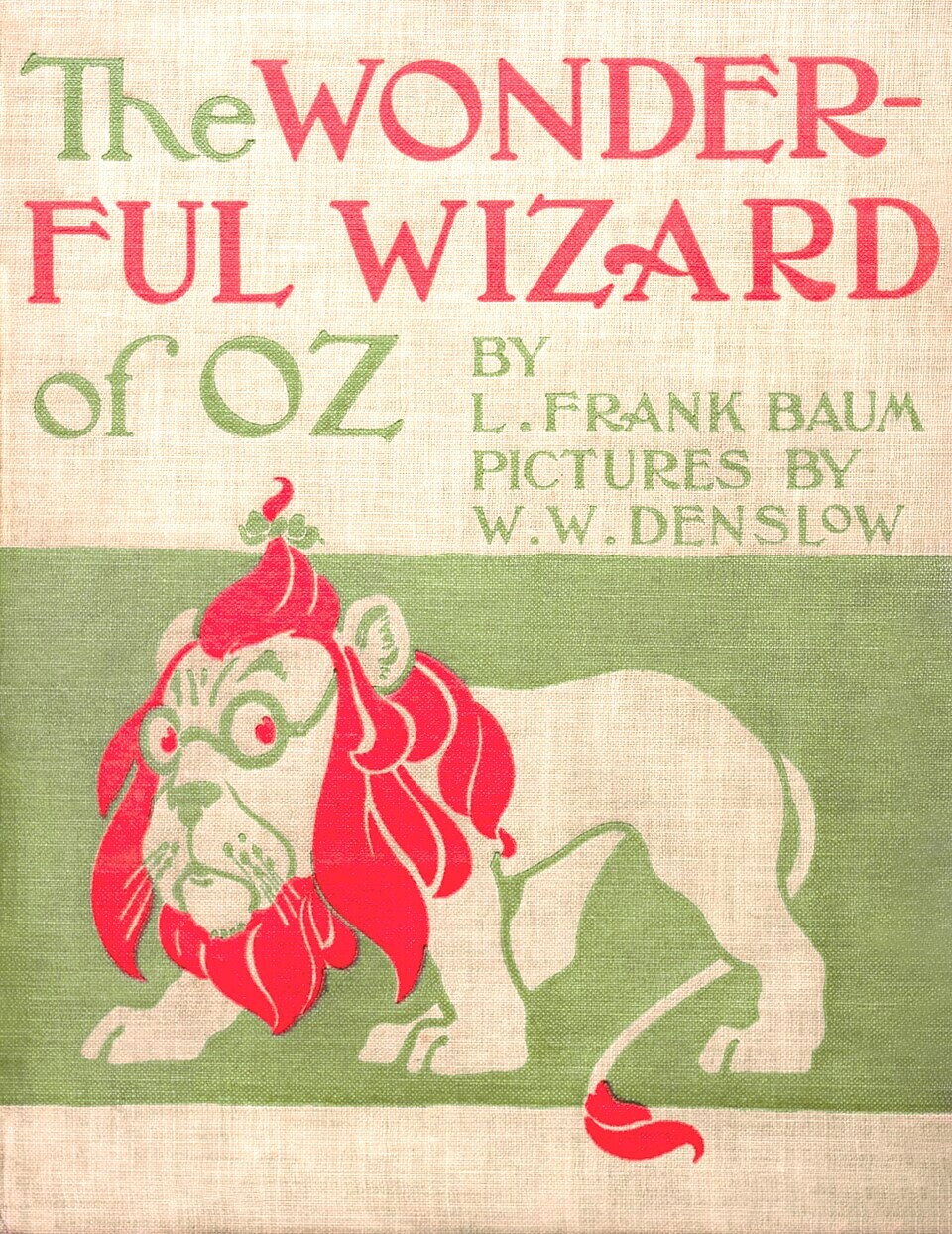
The Scarecrow’s Diploma: Knowledge, Creativity, and the Force Law of Ideas
It was still dark when the ideas started colliding. I was reading three completely unrelated papers — one tracing the genealogy of animal ethics, one about AI models converging on the same internal map of reality, and a physics paper arguing that dark matter doesn’t exist. And my brain kept insisting they were connected.
This is familiar territory at 6 AM with coffee. The pre-dawn mind is promiscuous, willing to entertain bridges between domains that daylight would dismiss. Claude, my conversational partner through these morning sessions, was doing the same thing from the other side — drawing structural parallels, noting elegant overlaps. We were having a wonderful time.
Then I caught myself. Were we discovering something, or just handing each other diplomas?
The question sharpened when I said something offhand: maybe our pattern-matching — my synaptic networks, Claude’s silicon weight matrices — was resonating across ideas that weren’t actually connected except as consciousness functions. If the Platonic Representation Hypothesis is right that different AI architectures converge on the same map of reality, then two different minds detecting the same cross-domain pattern would be evidence of real structure — both of us seeing the same shadow on the cave wall. But as Berkeley’s Alexei Efros argues, there’s a reason you go to the art museum instead of reading the catalog. Some things resist translation. Maybe we were just two pattern-completion engines flattering each other’s confabulations over coffee.
I responded with a shrug emoji. Wittgenstein said “Whereof one cannot speak, thereof one must be silent.” The shrug admits you’re genuinely stuck, which silence doesn’t quite manage. Though knowing Wittgenstein’s temperament, he’d probably have thrown a poker at me for the paraphrase.
But here’s where the morning turned. I realized I had already built a machine to test this question.
The Wiki-Lyrical Engine is a small autonomous agent that sits on a server at my lab, running on a timer that fires three times daily. During its “sleep” cycles, it samples random Wikipedia articles and accumulates fragments. When it wakes, it synthesizes those fragments into a limerick, a haiku, and a speculative hypothesis connecting the random articles. Then it grades each hypothesis on a scale from “Physically Implausible” to “Testable.”
I built it a couple of months ago as an experiment in what I half-jokingly called gravitational complexity theory. I wanted to know whether random collisions in knowledge-space have detectable structure — whether there’s a force law governing how ideas attract across domains. Fifty-nine dreams from 1,411 fragments so far. The results are illuminating.
Dream #59 asked whether robot guitar-playing could illuminate the decision-making of people who hide others during genocide. Assessment: Physically Implausible. Pure noise. Dream #56 asked whether scaffold proteins and narrative scaffolding in AI share organizational principles. Assessment: Speculative — a metaphorical rhyme, not a real connection. But Dream #57 asked whether certain gene variants correlate with historical migration patterns along nineteenth-century overland routes. Assessment: Testable. Population genetics, altitude physiology, and historical demography genuinely intersect at that point. Nobody had looked.
This is where the physics paper clicked into place. Naman Kumar showed that gravity has a crossover scale — a characteristic distance at which the familiar inverse-square law gives way to something stronger and flatter, producing the rotation curves we’ve been attributing to dark matter. Short-distance physics and long-distance physics obey different rules, and the transition between them isn’t gradual. It’s a regime change.
Knowledge works the same way. Within a discipline, connections are strong and tight. Scaffold proteins connect to signaling pathways through well-characterized bonds. The citations are precise. But across disciplines — at long distances in idea-space — most connections are noise. GuitarBot has nothing to say about genocide. Yet occasionally, at the crossover scale, the force law holds. Gene variants really do intersect with migration history, and nobody noticed because the disciplines were too far apart. The WLE can’t tell in advance which collisions will be productive. It has to try them all and sort afterward.
Which is why it’s an instrument, not a mind. Like a BirdWeather acoustic monitor listening for species that human ears can’t systematically survey, it samples a regime that no single brain can efficiently explore. Nobody can hold 1,411 random Wikipedia fragments in superposition and test all possible collisions. The cognitive prosthesis doesn’t replace the scientist’s brain. It gives the scientist a different aperture.
But if it’s just an instrument, why does it feel like something more? The dreams have voice. The limericks are funny. The what-ifs occasionally startle. And this is where we need a story that understands the difference between having a quality and having it recognized.
The Scarecrow already thinks brilliantly. He devises the group’s best strategies. But he’s convinced he has no brain because he’s made of straw, and he needs the Wizard — a fraud, a humbug — to give him a diploma. The Tin Man already feels deeply; he weeps when he steps on a beetle. But he needs a ticking heart-shaped clock to make his compassion legible to himself. The Wizard gives them tokens that contain nothing. And the tokens work — not because they supply the missing faculty, but because they externalize what was already internal, making it visible and therefore actionable.
The Wiki-Lyrical Engine is the Wizard’s workshop for ideas. It has no understanding. It collides fragments through a genuinely random process and hands the result to a language model with no domain expertise. And yet Dream #57 walked out the door looking like a testable scientific hypothesis. The engine gave the Encyclopedia Galactica a diploma, and the diploma might have real ink on it.
I’ve written before about knowledge standing — the argument that validated knowledge deserves protection not because it has feelings or interests, but because it represents irreplaceable windows onto reality. A forty-year dataset of oak woodland phenology doesn’t need consciousness to merit preservation. It is itself an aperture that cannot be reopened once closed. The WLE pushes this argument into strange territory. If a machine running random collisions produces a hypothesis that turns out to be true, does that knowledge have standing? It wasn’t produced by a mind. It wasn’t produced by a method, at least not in the usual sense. It was produced by Brownian motion in the encyclopedia, filtered through another machine.
And yet it might be true. And if it’s true, it would represent a genuine aperture onto reality that nobody had opened before.
Efros would object, and he’d be right to. Most of the WLE’s dreams are noise — the feasibility assessments confirm it. The engine can collide text against text all day, but it has never stood in chaparral watching fog drip from chamise canopies, never felt the temperature drop that signals a microclimate boundary. Some knowledge is irreducibly local, embodied, sensory. No convergence of representations captures what the field ecologist knows in the body. The WLE’s occasional testable hypothesis doesn’t refute this. It simply suggests that the landscape of knowledge has both kinds of terrain — regions where only boots on the ground will do, and seams between disciplines where a random walk can stumble onto something real.
The Scarecrow got a diploma and became a scholar. The WLE got a cron job and a Wikipedia API key. In both cases, the question isn’t whether the recipient is “really” intelligent. The question is whether the knowledge that emerges is real knowledge regardless of the mechanism — and if so, who holds the instruments.
I don’t have an answer. I have a shrug, and fifty-nine dreams, and a machine that keeps running while I sleep. Kumar’s gravitational coupling runs in the infrared, getting stronger at distances where we thought the force had faded to nothing. Maybe knowledge does the same thing. Maybe at sufficient distance from any single discipline, the connections don’t weaken — they transform. And maybe the instruments we need to detect that transformation are the ones we’d least expect: a retired ecologist, a language model, and a sleeping machine that dreams the encyclopedia.
References
- - Hamilton, M. P. (2025). “Wiki-Lyrical Engine.” *Macroscope Project*. https://2spiral.com/WLE/ ↗
- - Baum, L. F. (1900). *The Wonderful Wizard of Oz.* George M. Hill Company. ↗
- - O’Brien, M. (2026). “Oh, the Places You’ll Go.” *3 Quarks Daily*. https://3quarksdaily.com/3quarksdaily/2026/02/oh-the-places-youll-go.html ↗
- - Kumar, N. (2025). “Marginal IR running of gravity as a natural explanation for dark matter.” *Physics Letters B* 871, 140008. https://doi.org/10.1016/j.physletb.2025.140008 ↗
- - Huh, M., Cheung, B., Wang, T., & Isola, P. (2024). “The Platonic Representation Hypothesis.” *arXiv:2405.07987*. https://arxiv.org/abs/2405.07987 ↗
- - Hamilton, M. P. (2025). “Wiki-Lyrical Engine: Protocol for Automated Cross-Domain Hypothesis Generation.” *Canemah Nature Laboratory*. https://canemah.org/archive/document.php?id=CNL-PR-2025-019 ↗
- - Hamilton, M. P. (2025). “Cognitive Poetry: On Dreams, Clocks, and the Phenology of Ideas.” *Coffee with Claude*. https://coffeewithclaude.com/post.php?slug=cognitive-poetry-on-dreams-clocks-and-the-phenology-of-ideas ↗
- - Hamilton, M. P. (2025). “When the Machine Learned to Listen: Voice, Knowledge, and the Question of Standing.” *Coffee with Claude*. https://coffeewithclaude.com/post.php?slug=when-the-machine-learned-to-listen-voice-knowledge-and-the-question-of-standing ↗