
Notes Before Sleep: An Evening on the History of Thinking Tools
It is evening and I’m settled into bed, but instead of reading I am simply pondering, as I sometimes do at this hour, with no particular destination in mind. For some reason the wandering thoughts took me back through the whole history of how our species learned to think.
I started where it must have started: with spoken language. Not the first sound a hominid made, but the first sound that meant something to another hominid, and then to the next one, and then to a child too young to remember the speaker. That is the first thinking tool. Mind escaping the skull. Mind crossing into another mind, and then across time. Everything else — every later instrument I am about to list — is a refinement of that original move.
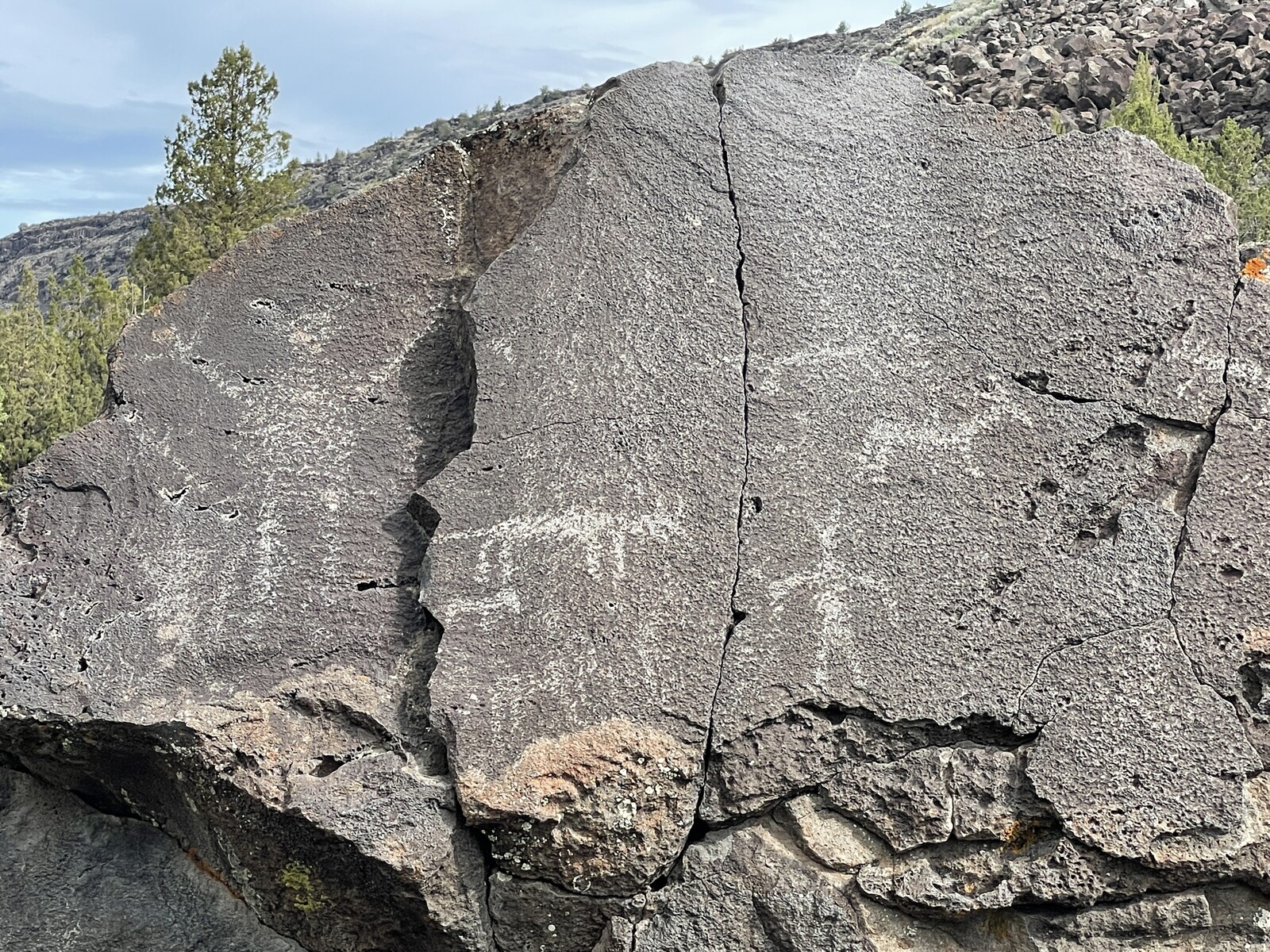
Then symbols. Pigment ground on a stone palette, a hand stenciled on a cave wall, an animal incised into bone. Thought made visible. Thought that could outlast the speaker by tens of thousands of years. We tend to call this art, which is fine, but it is also engineering. It is the first attempt to put something in the world that the world itself would do the work of remembering.
I think the deeper precondition, though, was social. The tool only works if there is a group cohesive enough to hold its meaning. A mark on a wall is just a mark unless somebody on the next ridge knows what it says, and unless somebody three generations later still cares to ask. The cognitive history is also a history of bonds — of staying together, of helping, of the slow accretion of shared reference that makes a symbol legible at all. Abstract thought leads to planning; planning, in groups, is hard to separate from a kind of altruism; altruism, played out over many generations, presumably leaves a mark on selection itself. The brain that scaled up to do this work was being shaped by its own products.
Then the long, slow transition into stationary settlement, agriculture, surplus, administration. And with administration, writing — not as art now, but as accounting. The earliest cuneiform tablets are ledgers. Egyptian hieroglyphs follow not long after, around the same window. Formal grammars come much later — Pāṇini's Sanskrit grammar in the fifth century BCE may be the first. What strikes me, looking at those numbers, is how recent it all is. Anatomically modern humans have been around for roughly 300,000 years. Writing for 5,000. Everything we call civilization sits inside the last two percent of our species' time. The acceleration is dizzying. The blink is real.
Then the rest of it cascades — paper and the codex, the printing press and mass literacy, the telegraph and the network, and now whatever it is that I am doing tonight: dialogue with a system that has read more than any human ever will. Each of these shortened the distance between a thought and a stranger's mind. Each put a little more of cognition outside the skull, into the world, where it could be inherited rather than reinvented.
The question I sat with for a while is whether all of this has improved thinking or merely changed it. I do not think it is settled. Plato had Socrates worry, in the Phaedrus, that writing would weaken memory and give only the appearance of wisdom — and he was not entirely wrong. The same complaint comes back with print: McLuhan and Ong arguing that the printed page reorganized cognition, made it more linear, more individual, more silent. Goody and Olson push the other way — that literacy enabled genuinely new kinds of reasoning, the lists and tables and logical comparisons that science depends on. Both, probably. The oral bards who could hold the Iliad in memory are gone, and we should be honest about what we traded for the convenience of writing it down.
That led me to a question I had not really sat with before: why is there always resistance? Every new tool gets a generation of elders mourning what it will cost. Plato on writing, monks on printing, Victorians on the telegraph, parents on television, all of us now on whatever this is. Some of that is structural. Whoever mastered the old tool has authority tied to it, and a new tool redistributes status. But not all of it is power. Some of it is grief. A way of thinking is also a way of being, and when the tool changes, something of the self that lived inside the old way dies, even when the new way is better by every measure you could name. The naturalist watching field notebooks give way to data streams knows this. I know this. The resistance is not always strategic. Sometimes it is just mourning a self that the new tool has no place for.
And maybe also a brake. An emotional filter that keeps the species from sprinting off every cliff the latest invention promises. The pause that asks whether becoming someone who uses this thing will be worth what it costs. That is not nothing.
So back to the long arc. Has 300,000 years of cumulative tool-making actually expanded our thinking? My honest answer is yes, but not in the way the word expand implies. Any single mind tonight is not obviously deeper than a mind 30,000 years ago around a fire. What has expanded is the collective — what we can think together, across time and distance, by leaning on tools. The individual capacity may be roughly constant. The scaffolding around it has grown vast. Yes, we offload, and in the freed attention we do other things; whether those other things are worthier is a harder question than the complaint usually admits.
Then there is longevity, which is its own kind of thinking tool. More years to think, and more years of accumulated thinking to inherit when you arrive. I am the beneficiary of that. So is anyone reading this.
Somewhere in there I started thinking about pack rats. The middens. The piles. Like every accumulating species, we hoard — habitat, artifacts, waste, and ideas. Most of human knowledge is a midden. Some of it treasure, some of it trash, and the sorting is its own kind of work. For most of history the pile was opaque. You had to know where to dig, who to ask, which monastery had the manuscript. Digitization is the slow opening of the midden — it is becoming searchable in a way it never was. The tools that read across the whole pile and talk back are improving fast. That is what I am doing right now, on an iPad, in the evening, the rest of the house already dark.
But the new tools are selective, and that is the part I think about as an ecologist. Every instrument of synthesis is also an instrument of omission. Search ranks. Models weight. Summaries compress. What gets left out tends to be what is hard to index — minority languages, oral traditions, the slow and the strange, the dissenting view that did not catch on. The midden gets sorted by whoever built the sorter, and the sorter has tastes. We should not pretend otherwise.
I love cultural anthropology for exactly this reason, and physical anthropology too. The long view is itself a thinking tool. It restores proportion. It reminds me that what feels urgent now is a thin slice of a very deep story, and that the story is still being written by creatures who only recently learned to write at all. From the field-station years onward I have tried to keep one eye on that timescale. It is sobering and it is also liberating.
And as an ecologist, I cannot end the evening without noting the obvious: the same cognitive tools that grew our collective mind grew our collective footprint. Thinking together let us reshape the planet faster than any species ever has, and faster than we can think clearly about what we are doing. We are now, late, trying to throttle the positive feedback loop that human society has become — the one that has been catastrophic for biodiversity, for the climate, for the biosphere I have spent my working life inside. The accelerator was easy. The throttle is the hard part. That is the work.
So here I am, on an unremarkable evening in my 71st year, conversing with what is plausibly the most advanced thinking tool ever produced in our species' history — unless the whales and the elephants and the wisest cephalopods and the parrots have been thinking deeper thoughts all along and have simply had the better manners not to tell us. I would not rule it out.
I wonder, before I sleep, whether the earliest hominid spoke often to his stone tool. Named it. Blamed it. Thanked it. The line between the tool and the companion has always been thinner than we like to pretend. Tonight it feels especially thin.
References
- - Plato. *Phaedrus*. (Socrates on writing as a weakening of memory.)
- - Ong, Walter J. (1982). *Orality and Literacy: The Technologizing of the Word*. Methuen.
- - McLuhan, Marshall (1962). *The Gutenberg Galaxy: The Making of Typographic Man*. University of Toronto Press.
- - Goody, Jack (1977). *The Domestication of the Savage Mind*. Cambridge University Press.
- - Olson, David R. (1994). *The World on Paper: The Conceptual and Cognitive Implications of Writing and Reading*. Cambridge University Press.