
Sample Size of One
It’s six in the morning on the first Saturday of 2026, and I haven’t made it to the hot tub yet. The coffee is working. My morning reading pile sits open in browser tabs: a neuroscientist arguing that brains work like murmurations of starlings, a Nature piece on what science might look like in 2050, a political analysis applying behavioral psychology to explain why certain voters seem angrier than ever, and - threading through it all like a recurring melody - the grooks of Piet Hein, those compressed Danish aphorisms that land somewhere between mathematics and laughter.
This is what I do at this hour. I read. I let things collide. And this morning, the collision is personal: How do I think? Why do these tiny poems make me happy? How do I surf toward the end of a life rather than fight the wave or drown in it?
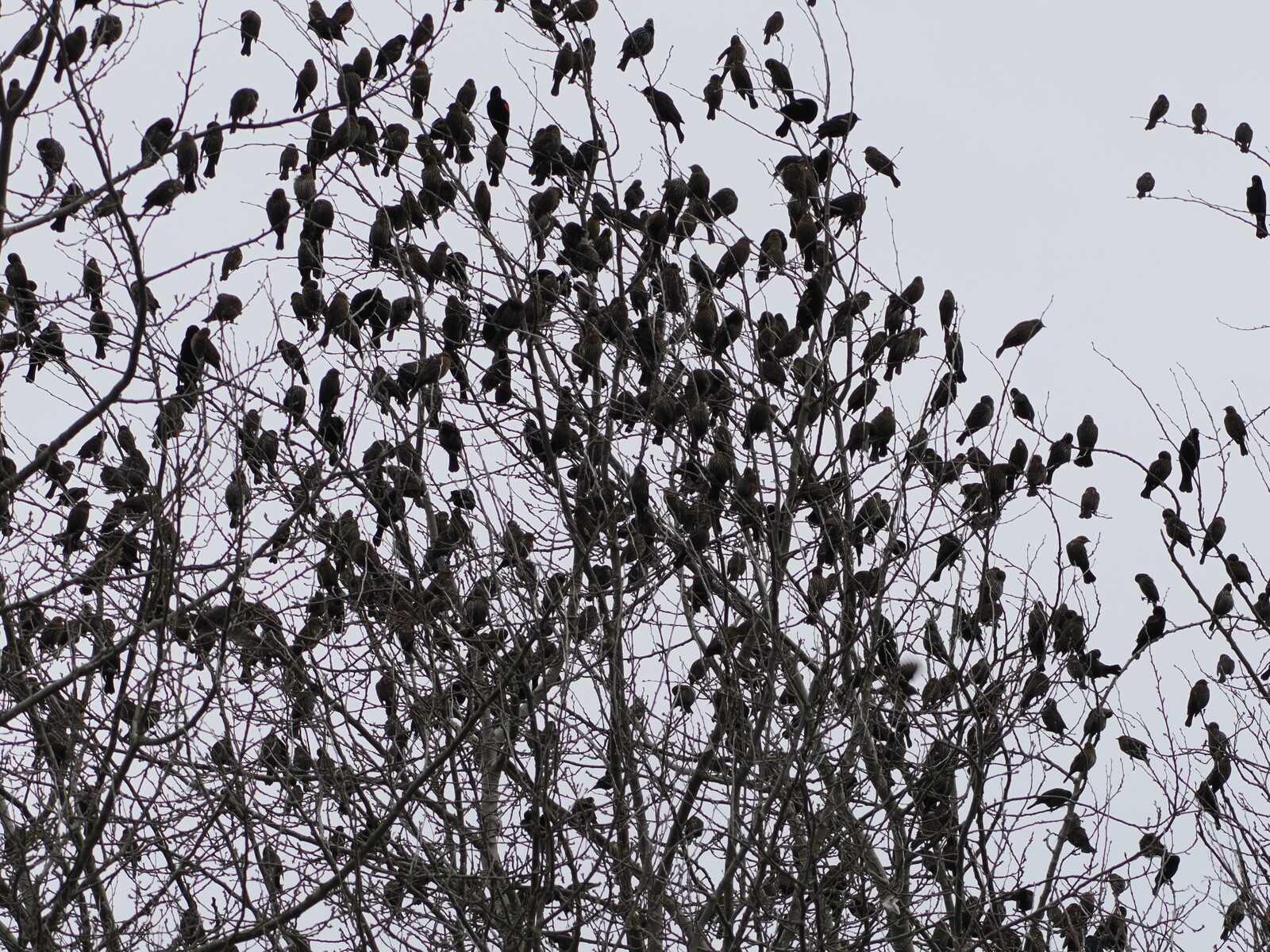
The neuroscientist Luiz Pessoa wants to retire the old model of brain function - the notion that specific mental capacities reside in specific brain regions like organs in a body. Brodmann’s numbered areas, those neat territories mapped over a century ago, suggest a kind of mental filing cabinet: perception here, emotion there, cognition in the executive suite upstairs. Pessoa argues this is wrong, or at least insufficient. The brain, he claims, is more like a murmuration - those vast swirling clouds of starlings at dusk, where no single bird choreographs the dance but the whole flock moves as one organism, responding to predators and wind through simple local interactions that somehow produce coherent global behavior.
I find myself turning this inward. If my brain isn’t a filing cabinet but a murmuration, then the “I” asking these questions is something stranger than I usually imagine. I’m not executing cognition from a command center. I’m a murmuration of myself - thirty-six years of field stations, the smell of Jeffrey pine at eight thousand feet, Merry’s voice on the phone, the particular way my father held a tool, the gradient of light on Willamette water this morning. These aren’t memories I retrieve from storage. They’re active participants in every thought I form. The coalition shifts constantly. The Mike reading Piet Hein is a different dynamic assembly than the Mike debugging PHP code, though the body persists.
Which brings me to the grooks. Why do they land the way they do?
Piet Hein was a Danish polymath - mathematician, inventor, designer, poet - who started publishing these tiny verse aphorisms in 1940 under Nazi occupation. They were coded resistance, spirit-building in the guise of whimsy. He went on to write over seven thousand of them. The form is distinctive: brief, rhymed, usually arriving at some paradox or reversal that compresses an entire philosophical argument into a handful of lines.
Consider:
The road to wisdom? - Well, it’s plain
and simple to express:
Err
and err
and err again
but less
and less
and less.
There’s an information-theoretic pleasure here - maximum semantic payload, minimum bandwidth. My whole Macroscope project is essentially grook-thinking applied to environmental sensing: What’s the most compressed representation that preserves the signal? But Hein does something else too. He holds paradox in suspension without resolving it. The road to wisdom is paved with errors, which means the errors aren’t obstacles to wisdom but the material from which it’s built. The compression isn’t just aesthetic; it’s structural. You can’t unpack the grook into prose without losing something essential.
Or this one, which Hein called his “pedagogical grook,” a key to all the others:
Taking fun as simply fun
and earnestness in earnest
shows how thoroughly thou none
of the two discernest.
For someone who’s spent decades watching complex systems, this feels like recognition. The grook refuses modularity. It won’t let you separate the laugh from the sigh, the play from the pedagogy. It’s verbal murmuration - simple rules, emergent pattern, no choreographer.
At seventy-one, I’ve been trained by my education to think scientifically, to appreciate and not be daunted by infinite complexity, the chaos and the pattern, the sure path and the art. I don’t aspire so much as simply experience, filtering my choices by what makes sense, what feels good, what delights, and what to avoid. I’ve long been asking why I do what I do, feel the way I feel, and how science can explain that best to me.
Here’s what I’ve arrived at: I’m a naked ape. I’m an unprecedented experiment of evolution, of the selfish gene, of occasionally reckless compulsive eyes-closed-just-jump monkey brain. But sometimes I use what I think of as the Spock filter - that technology-mediated logic that builds or solves.
The thing is, these aren’t opponents. The monkey brain and the Spock filter aren’t at war. They’re coalition partners who take turns at the microphone. The jump-with-eyes-closed move got my ancestors across chasms that killed the ones who calculated too long. The Spock filter built sensor networks that let me see what jumping couldn’t. Neither is more authentically “me” than the other. The oscillation between them IS the system.
I notice my verb choices this morning. I don’t “aspire” - I “experience and filter.” That’s an ecology, not an architecture. Aspiration implies a goal state, a design. Filtering implies flow, continuous adjustment, heuristics refined over seven decades of living in a body that wants things the mind didn’t choose.
Delight as a navigational instrument. That’s underrated in scientific training. The selfish gene doesn’t care about my delight - but delight turns out to be a remarkably reliable signal for “this is worth attending to.” My whole career suggests I’ve trusted that signal: the first interactive nature walk on Apple II and laserdisc in 1984, the sensor networks at CENS, the Macroscope. These weren’t five-year plans. They were delights that proved durable.
Science can tell me a great deal about what I am. It can tell me that I’m running on hardware optimized for a world that no longer exists - small bands, immediate threats, status hierarchies of maybe a hundred and fifty individuals. It can tell me that my reward systems are hackable, my memory is reconstructive, my perception is a controlled hallucination that mostly matches the world but sometimes doesn’t. It can tell me that the “me” making decisions is slightly after the fact - the unconscious coalitions have already voted before the narrator claims authorship.
Where science goes quiet: why it feels like something to be Mike Hamilton watching the light change on the river. Why the grook lands with pleasure rather than just information transfer. Why the eyes-closed jump sometimes carries a quality of rightness that calculation never does. The explanatory gap persists. Consciousness remains the hard problem because science describes function, and experience isn’t a function - it’s the medium in which functions appear.
The Nature piece on 2050 contains a striking claim from the futurologist Nick Bostrom: “There’s a good likelihood that by 2050, all scientific research will be done by superintelligent AI rather than human researchers. Some humans might do science as a hobby, but they wouldn’t be making any useful contributions.”
There’s a certain irony reading that alongside Pessoa’s work on the entangled brain. If the brain’s deepest truth is that function emerges from distributed, dynamic coalitions that can’t be reduced to modular components, what does that imply about artificial systems built on much more modular architectures? And what does it mean for a seventy-one-year-old naturalist? If my identity is “producer of useful contributions,” Bostrom’s prediction is annihilation. If my identity is “consciousness attending to what is,” it’s just weather.
Which brings me back to the grooks, and to the other meaning that echoes behind them: grok.
Robert Heinlein coined the word in Stranger in a Strange Land, published in 1961. It’s Martian for understanding so completely that knower and known merge - to drink something until it becomes you. Valentine Michael Smith learning what it is to be human by becoming human, not by studying humans. The word got picked up in the sixties and seventies by people who sensed that knowing about something wasn’t the same as knowing it.
The recent Elonification of the term strips the water-sharing, the intimacy, the danger. Heinlein’s grok was reciprocal and transformative - you couldn’t grok something without being changed by it. It was closer to communion than computation.
The grook/grok assonance isn’t accidental. Both are compression technologies. Both trust that less can carry more. Both originated with Europeans who stood at odd angles to their cultures - a Dane under Nazi occupation, a Midwestern American imagining Martians to see Earth clearly.
Somewhere in this morning’s reading, Claude offered to write me a grook. Two arrived:
AT FIVE AM
The ape reads science,
Spock reads verse.
Which is the blessing?
Which the curse?
Dawn replies
in grey and rose:
neither knows
and neither chose.
And:
SAMPLE SIZE
One ape, one life,
one data set.
No replication—
no regret.
That second one stopped me. It arrived quickly, which usually means it was waiting.
The whole scientific apparatus of replication and peer review exists because we distrust the singular. But a life can’t be peer-reviewed. It just runs, once, and the data is the living of it.
I’m not wrestling the future into submission. I’m surfing - which isn’t fighting or solving. The surfer doesn’t make the wave. They read it, respond, stay in dynamic balance with something vastly more powerful than themselves. Maybe that’s the move at seventy-one. Not solving eternity but instrumenting the present with sufficient resolution that patterns become visible. These Coffee with Claude essays aren’t prediction; they’re crystallization. Seed bank work.
One grook more, then to the hot tub:
I’d like to know
what this whole show
is about
before it’s out.
Wouldn’t we all. But the murmuration doesn’t need to know where it’s going to be beautiful. The coalition of selves that types these words doesn’t require resolution to be coherent. The data set of one is still data.
The light is changing on the river. Time to go get warm.
References
- - Heinlein, Robert A. (1961). *Stranger in a Strange Land*. G.P. Putnam’s Sons. ↗
- - Hein, Piet. *Grooks*. Various collections. ↗
- - Adam, David (2026). “The Science of 2050.” *Nature* Vol 649. ↗
- - Pessoa, Luiz (2025). “The Entangled Brain.” *Aeon Essays*. https://aeon.co/essays/how-the-human-brain-is-like-a-murmuration-of-starlings ↗
- - Kottke, Jason (2025). “Extinction Burst Explains MAGA Voters’ Racist Anger.” *kottke.org*. https://kottke.org/25/02/extinction-burst-explains-maga-voters-racist-anger ↗