
Solstice: Notes on Scientific Pantheism and the Miracle of Noticing
I woke this morning thinking about my own flavor of spirituality. Rain against the windows, coffee in hand, the Macroscope reporting 53°F and 100% humidity—a saturated Pacific Northwest December dawn. In four days the Earth reaches the extreme of its axial tilt, pauses, and begins the long return toward light. I’ll be in Bellingham by then, with Merry, marking the solstice in whatever quiet way presents itself.
The trigger was Maureen Dowd’s essay on James Cameron, published Sunday in the Times. Cameron at 71—my age exactly—sitting in his museum of tech noir creations, explaining to Dowd why an atheist has spent two decades making films that celebrate spiritual connection to nature. He’s technically godless, he tells her, but then sends a long email from China trying to articulate what he actually believes:
“Everything I’ve ever witnessed in the natural world seems to have an almost religious power, in its beauty and infinite complexity, from the wonders of the microscopic world to the vastness of the observable universe.”
He went to the bottom of the Mariana Trench and came back “overwhelmed by a sense of deep time, beyond our human grasp.” He jokes that maybe he was a Druid in a past life.
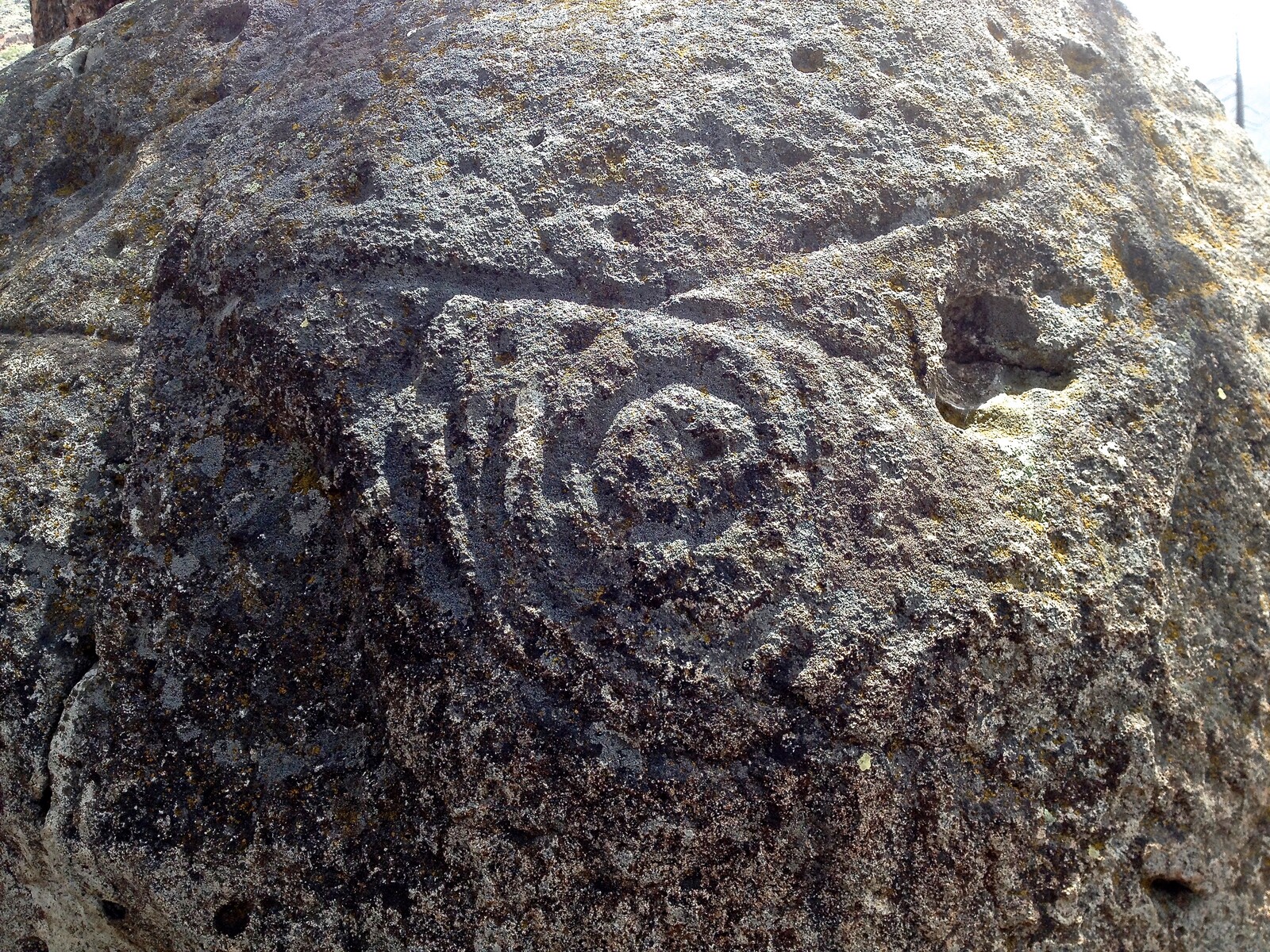
I was a Druid too, in a manner of speaking. For a decade I played in the Society for Creative Anachronism, perfecting the persona of Broichan maqq Kynat—Broichan son of Kynat, a Pictish figure related to the famous druid who appears in Adomnán’s Life of Columba. The historical Broichan stood at the threshold when Christianity arrived in northern Scotland, foster-father to King Bridei, the last defender of a way of knowing that would soon go extinct. I built a website, researched the symbol stones, corresponded with other Pictish enthusiasts across the medievalist community. It was play, but the kind of play that teaches you something about yourself.
What it taught me: I’m drawn to liminal moments. The solstice. The confrontation between worldviews. The instant before a framework collapses and something new emerges.
Cameron’s accidental pantheism has a name. In the late 1990s, a group of academics coalesced around Paul Harrison’s website on pantheist theory, eventually forming the World Pantheist Movement. They called their philosophy Scientific Pantheism—“a modern form of pantheism that deeply reveres the universe and nature and joyfully accepts and embraces life, the body and earth, but does not believe in any supernatural deities, entities or powers.”
The core insight is simple: we are not in exile here. We are home. It is only here that we will ever get the chance to see paradise face to face. If we believe the numinous is found only in old books, or old buildings, or inside our head, or outside this reality, then we see this real, vibrant, luminous world as if through a glass darkly.
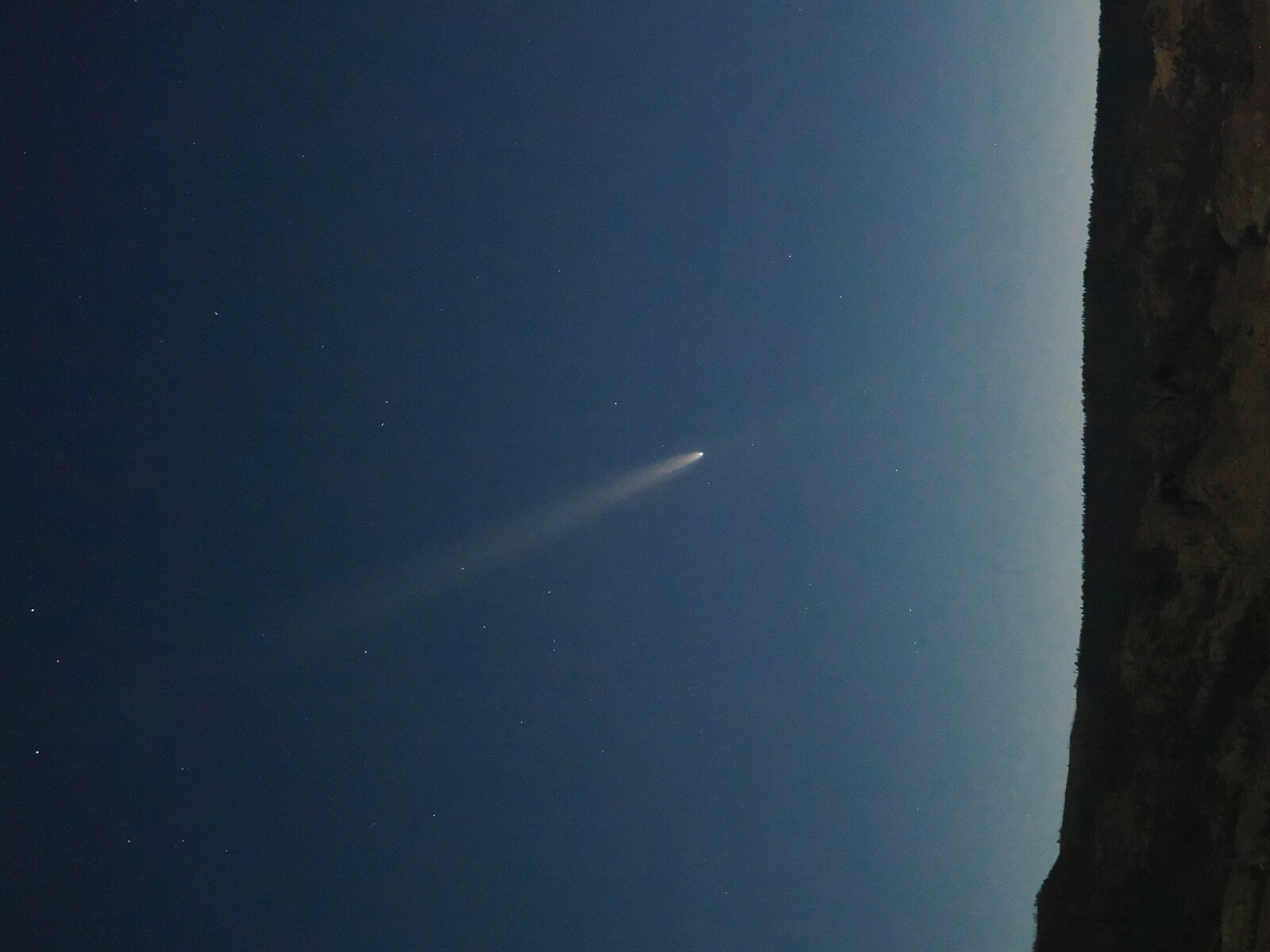
Scientific pantheism treats astronomical events as sacred occasions—solstices, equinoxes, the turning points of the planet’s relationship to the sun. Not because a deity ordained them, but because we’re here to notice them. That’s the miracle. Noticing.
I’ve been writing a novel. Hot Water, I’ve been calling it—from 20 year old notes, and now with help from my digital editor, after our morning sessions. The premise: the Chicxulub impactor wasn’t carrying a probe; it was the probe. A fragment of alien geology whose quantum iridium chemistry acts almost virally when it contacts terrestrial ecosystems. Not technology. Not a designed experiment. Something stranger: a piece of another world’s geology doing what its chemistry naturally does when it encounters replicating systems. Influencing evolutionary probability landscapes. Recording the interactions in crystalline lattice. Compressed history riding piggyback through 66 million years of deep time.
One of my characters is Dr. David Mitchell, quantum physicist at NASA Ames. His secret: for fifteen years he’s maintained an SCA persona—Broichan maqq Kynat. He’s corresponded with a Scottish geologist about Pictish symbol stones, never connecting his two identities until his quantum detector begins outputting patterns that match the ancient carvings.
I gave him my druid.
The novel’s spiritual claim is embedded in what looks like hard science fiction: consciousness isn’t an accident or an epiphenomenon. It’s what the whole system has been tilting toward. Pattern recognition elaborating through deep time until something emerges that can look back at the record and experience awe at what it contains.
Not God in the supernatural sense. God in the gasp sense. The sharp intake of breath when you realize you’re a temporary arrangement of matter that has somehow become capable of wondering about its own existence.
Cameron, from his email to Dowd: “Whenever we think we’ve come up with a new idea, we always find that nature has beat us to the punch by hundreds of millions of years.”
That’s it exactly. The cosmos keeps records. The crystals in my novel are fiction, but the underlying intuition is real: we are part of something vast that has been developing patterns long before we arrived to name them. Our job—if we have a job—is to notice. To mark the solstice. To feel the awe that comes from being briefly, improbably, luminously aware.
Yesterday I wrote an essay about fire—the campfire that made us human, the hearth at the field station where Harry James carved “I cannot warm you if your heart be cold.” Fire as the original gathering point, the place where language and story first flowered. Today the thread continues: not fire but the tilt of the planet, the geometry of our orbit, the astronomical clock that our ancestors watched with such attention that they built Stonehenge to mark its turning.
I’ll be heading north tomorrow through the winter-grey Cascades. Merry will meet me in Bellingham. We’ll have four days before the solstice—time for reunion, for reading, for the quiet pleasures of being together in a dark season.
And on Saturday, the longest night, I’ll think about what it means to be a pattern that recognizes patterns. A druid without a grove, a scientist without a lab, a writer whose collaborator exists as probability distributions in silicon—standing at another threshold, marking another turn.
The cosmos isn’t talking to us. It’s just keeping records. And we finally learned to read.
References
- - World Pantheist Movement (2025). “Scientific Pantheism: Reverence of Nature and Cosmos.” pantheism.net. ↗
- - Harrison, Paul (1999). *Elements of Pantheism: A Spirituality of Nature and the Universe*. World Pantheist Movement. ↗
- - Dowd, Maureen (2025). “James Cameron Tempers His Temper and Channels His Inner Na’vi.” *The New York Times*, December 14, 2025. ↗