
The Metabolic Cost of Knowing
It is Tuesday morning in Oregon City, Oregon, and the Macroscope — my home ecological observatory above Willamette Falls — reads fifty-nine degrees, sixty-six percent humidity, light wind out of the south. Ten bird species are active. American robins and dark-eyed juncos are singing in the urban forest just above the Willamette River. The system has logged 478 bird detections in the last six hours and pulled 286 weather readings in the past day, quietly doing what it always does: measuring, recording, paying attention.
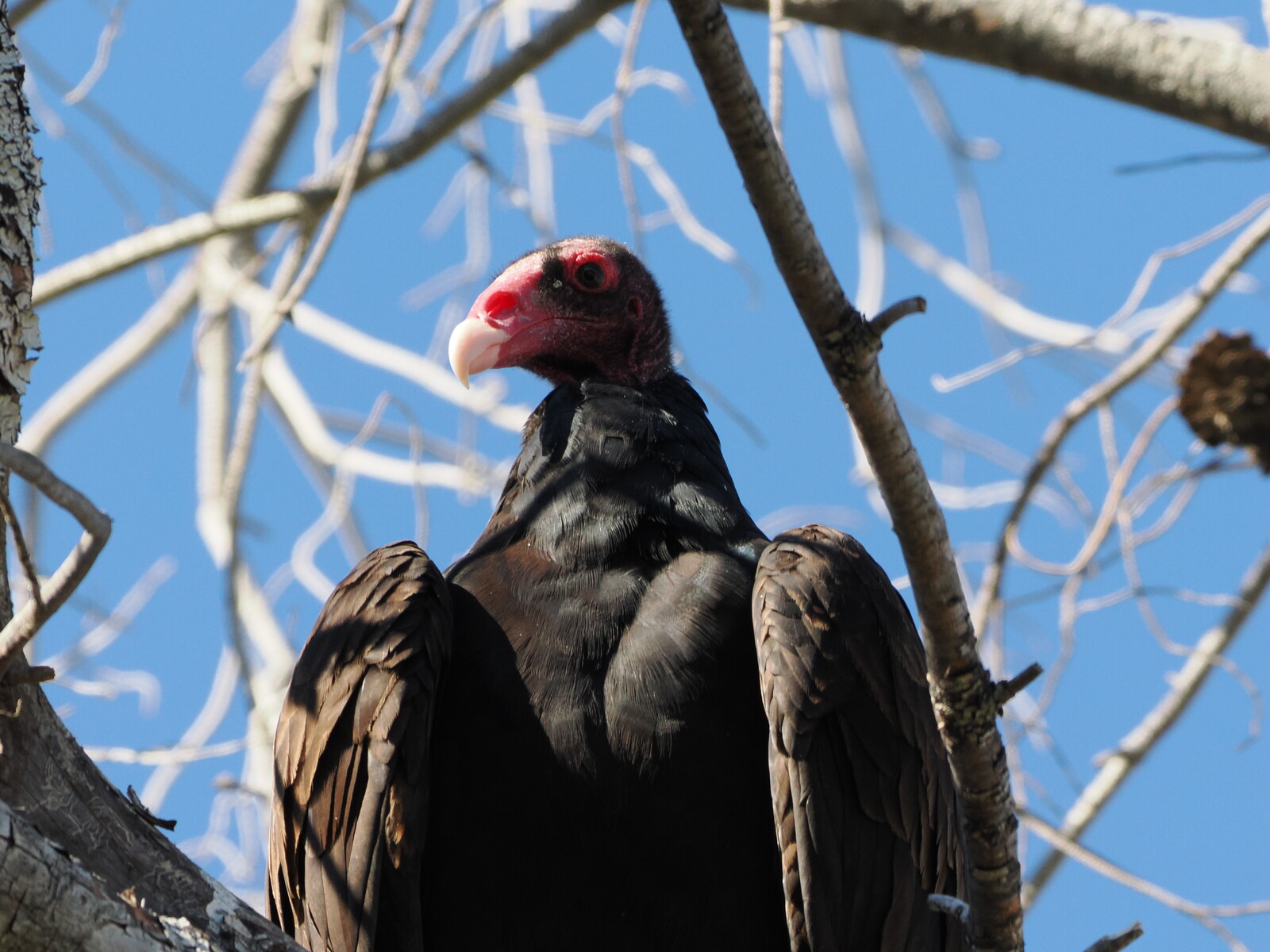
Yesterday I was in Borrego Springs, deep in the Colorado Desert, where temperatures hit 105 and the afternoon light on the Vallecito Mountains turned the alluvial fans the color of old brass. For two weeks, my partner Merry and I lived in the kind of sensory saturation that only the desert provides — Swainson's hawks and Turkey Vultures kettling through superheated thermals during a spectacular spring migration, desert iguanas hunkering under the yellow blooms of the Brittle Bush, and despite being the hottest winter ever recorded in this place, hundreds of species of plants, animals and insects survive. My iNaturalist feed is still full of it: silver senna, spiny senna, Fremont's monkeyflower, zebra-tailed lizards. That world is still on my dashboard, layered over the cool green morning in the Willamette Valley like a palimpsest.
The transition is abrupt. The desert was ninety percent observation — eyes, ears, feet on the ground, notebook in hand. This morning is synthesis. During two weeks away, the science and current events feeds accumulated, and what arrived overnight constitutes an unusually rich cross-section of where human knowledge stands right now, this particular Tuesday in March 2026.
Here is what landed: a peer-reviewed paper in Geophysical Research Letters demonstrating that global warming has statistically significantly accelerated since 2015. The World Meteorological Organization's annual State of the Global Climate report, confirming 2025 as the second or third warmest year in the 176-year record. A twelve-year grassland experiment in Nature Climate Change showing that drought amplifies warming-induced soil carbon loss through microbial mechanisms. A study in the Proceedings of the Royal Society revealing that termite colonies collapse when uric acid accumulation suppresses their workers' immune systems. Two Nature Electronics papers — one on quantum computers controlled by superconducting digital circuits at millikelvin temperatures, another on a Weyl semimetal device that rectifies electromagnetic signals across a hundred-gigahertz bandwidth using the geometry of quantum wavefunctions. A Nature Neuroscience paper deconstructing mouse memory engrams with sub-second temporal precision. A conservation genetics study extracting complete mitochondrial genomes from otter fecal samples on a Welsh river. An Asimov Press essay arguing that AI risks trapping science in "hypernormal" mode — better prediction within existing paradigms, weaker capacity for new questions. A Guardian long read on China's robotics revolution and the invisible labor force training humanoid machines. A philosophy essay on atheism and the search for meaning without metaphysical comfort. And a preprint on whether large language models can detect when they're being deceived.
Twelve papers. Climate physics, soil microbiology, social insect immunology, quantum electronics, topology, neuroscience, conservation genetics, philosophy, AI safety, geopolitics, robotics. This is not a curated syllabus. This is what the world served up on a single morning. And the fact that it hangs together — that there are threads running through all of it — says something about where we are as a species that no single paper can say alone.
The thread I want to pull runs through thermodynamics.
Every system in this morning's reading — from the planet's atmosphere to a termite colony to a quantum processor to my own desk — faces the same constraint: maintaining organized complexity costs energy, and when the energy budget is misallocated, the system degrades from the inside before it collapses from the outside.
The WMO introduced a new climate indicator this year: Earth's energy imbalance. More energy enters the system than leaves it. The excess accumulates — ninety-one percent in the ocean as heat, three percent melting ice, five percent warming land, one percent at the surface where we live and measure. Foster and Rahmstorf have now shown, with better than ninety-eight percent confidence across five independent global temperature datasets, that the rate of accumulation is itself accelerating. The warming didn't just continue. It sped up. And it sped up around 2013 or 2014, and nobody detected it until now, because the natural variability of El Niño events and volcanic eruptions and solar cycles masked the signal. Only when the researchers statistically removed those sources of noise did the acceleration emerge — clear, unambiguous, present in every dataset. The planet crossed a threshold a decade ago and we couldn't see it through the fluctuations.
That pattern — a real change hidden beneath noise, detectable only when the right method strips the noise away — recurs throughout the morning's reading. The Welsh otter researchers extract a complete host mitochondrial genome from the microbial chaos of a fecal sample. The French neuroscientists tag neurons active during specific seconds of fear conditioning and discover that the memory engram is not one thing but a composite of distinct temporal ensembles, only some of which matter for recall. The quantum computing team achieves 99.9 percent gate fidelity by moving the control electronics to within ten microns of the qubits, eliminating the noise of room-temperature wiring. In every case, what was always there becomes visible only when the floor drops low enough to see it.
But the deepest connection runs between the termites and the data centers.
Konishi and colleagues studied what kills a termite society. When the colony's primary king is lost and replaced by inbred secondary kings, the workers accumulate uric acid — a nitrogen waste product that, as it happens, is also a powerful antioxidant. The uric acid scavenges reactive oxygen species. This sounds beneficial, but reactive oxygen species are a key component of innate immunity. As they decline, the workers become susceptible to opportunistic pathogens that were always present in the nest but previously held in check. The colony doesn't die from a new threat. It dies because its internal metabolic balance shifted, its defenses quietly failed, and the ordinary hazards of existence became lethal. The signature of the process is the appearance of normalcy. The colony looks fine right up until it collapses.
Now read Kevin Roose's New York Times piece from last week about "tokenmaxxing" — the emerging culture at companies like OpenAI, Anthropic, and Meta where engineers compete on leaderboards to show how many AI tokens they consume. One OpenAI engineer processed 210 billion tokens in a single week. An Anthropic user ran up $150,000 in a month. Companies are putting AI usage metrics on performance reviews. Software engineers run dozens of autonomous coding agents overnight, generating billions of tokens while they sleep — not because anyone has demonstrated that this produces better software, but because the leaderboard rewards consumption itself. As Roose notes, the leaderboards don't measure output quality. They measure volume. The metabolic expenditure of the system has become decoupled from the function it is supposed to serve.
This is the termite's uric acid. It looks like productivity. It looks like progress. But what it's actually doing is flooding the system with a metabolite that suppresses the capacity for the thing that matters most — in the termite's case, immune function; in ours, genuine thought. The Asimov Press essay names it precisely: "hypernormal science," where AI makes us ever better at prediction within existing paradigms while weakening our capacity to ask entirely new categories of questions. And the LLM vigilance study demonstrates the mechanism: large language models that perform tasks competently are simultaneously unable to detect when they are being deceived, even when explicitly warned that deception is possible. Competence and discernment are dissociable. You can be good at the game and still not know when the game is rigged.
I feel this contradiction personally. I am using AI — right now, in this conversation — to synthesize twelve papers into a single essay. The compute required to hold all of them in working memory, to find the linkage propositions across domains, to draft and revise this text, dissipates heat in a data center somewhere. Every inference contributes, marginally, to the energy imbalance that Foster and Rahmstorf just quantified. I am burning tokens to write about the cost of burning tokens.
Flying home from Palm Springs yesterday, the pilot gave an unusually detailed preflight briefing that included the fuel consumption of our aircraft — the gallons of jet fuel per second were staggering, a number that makes you grip the armrest existentially. But when you divide that consumption across a full plane of passengers traveling a thousand miles, the per-seat-mile efficiency converges on what the EPA says it costs to drive my Chevy Bolt EV on the highway. The physics is the same; the framing determines whether you feel horror or rationality. And critically, the decision to fly was already made before the calculation. The efficiency is a post-hoc justification for a choice driven by the need to get home.
There is no clean position. The philosopher Jeroen Bouterse, writing this week in 3 Quarks Daily about why he remains an atheist, arrives at the same place through entirely different terrain. He quotes Richard Rorty: what matters is our loyalty to other human beings clinging together against the dark, not our hope of getting things right. There is no external redemption. No metaphysical comfort. No way to use technology without contributing to the problem the technology is meant to address.
But there are distinctions within the unclean. Guo and colleagues measured soil carbon on an Oklahoma prairie every year for twelve years — not because any single year's data would be conclusive, but because only sustained observation reveals the trend beneath the noise. Du Plessis knelt by the river Usk to collect otter spraint because the species deserved to be monitored. In Idyllwild, California, my friend Bruce Watts — a self-taught naturalist who died last week — spent eight days walking Garner Valley mapping 159 individual cotton-thorn plants, one at a time, without a grant, without institutional support, because the mountain was alive and it deserved to be known.
Against these stands the tokenmaxxer running overnight coding agents, consuming billions of tokens while sleeping, measuring worth by volume.
Outside my window, the robins are still singing. The Macroscope is still recording. Twelve papers sit on my desk like threads pulled from a loom that is wider than any single essay can span.
References
- - du Plessis, S.J. et al. (2026). "Recovering whole mitogenome sequences from Eurasian otter spraint samples." *R. Soc. Open Sci.* 13: 251299. ↗
- - Roose, K. (2026). "More! More! More! Tech Workers Max Out Their A.I. Use." *The New York Times*, March 20, 2026. ↗
- - Robinson, S. et al. (2026). "Under the Influence: Quantifying Persuasion and Vigilance in Large Language Models." arXiv:2602.21262v3. ↗
- - Djajadikerta, A. (2026). "Designing AI for Disruptive Science." *Asimov Press*. DOI: 10.62211/29ej-27et ↗
- - Che, C. (2026). "Inside China's robotics revolution." *The Guardian*, March 19, 2026. ↗
- - Foster, G. & Rahmstorf, S. (2026). "Global warming has accelerated significantly." *Geophysical Research Letters*, 53, e2025GL118804. https://doi.org/10.1029/2025GL118804 ↗
- - World Meteorological Organization (2026). "State of the Global Climate 2025." WMO-No. 1391. https://doi.org/10.59327/WMO/S/CRI/SOC1 ↗
- - Guo, X., Yang, Z., Jian, S. et al. (2026). "Drought amplifies warming-induced soil carbon loss in a decade-long experiment." *Nature Climate Change*. https://doi.org/10.1038/s41558-026-02584-2 ↗
- - Konishi, T. et al. (2026). "What kills a society: accumulation of uric acid increases infectious disease risk in termites." *Proc. R. Soc. B* 293: 20252438. https://doi.org/10.1098/rspb.2025.2438 ↗
- - Pouget, C. et al. (2026). "Deconstruction of a memory engram reveals distinct ensembles recruited at learning." *Nature Neuroscience*. https://doi.org/10.1038/s41593-026-02230-2 ↗
- - Bouterse, J. (2026). "Why I am still an atheist." *3 Quarks Daily*, March 23, 2026. https://3quarksdaily.com/3quarksdaily/2026/03/why-i-am-still-an-atheist.html ↗
- - Jordan, C. et al. (2026). "A quantum computer controlled by superconducting digital electronics at millikelvin temperature." *Nature Electronics*. https://doi.org/10.1038/s41928-026-01576-6 ↗
- - Hu, Z. et al. (2026). "An all-in-one Hall rectenna with a bandwidth over 100 GHz." *Nature Electronics* 9, 140–151. https://doi.org/10.1038/s41928-026-01574-8 ↗